 Foleart
Best Books for Book Folding: How to Choose
Sheet count, paper type, height and spine: the criteria that make a book work well for bookfolding — and the ones that ruin the piece.
Updated August 2026
The book defines the result
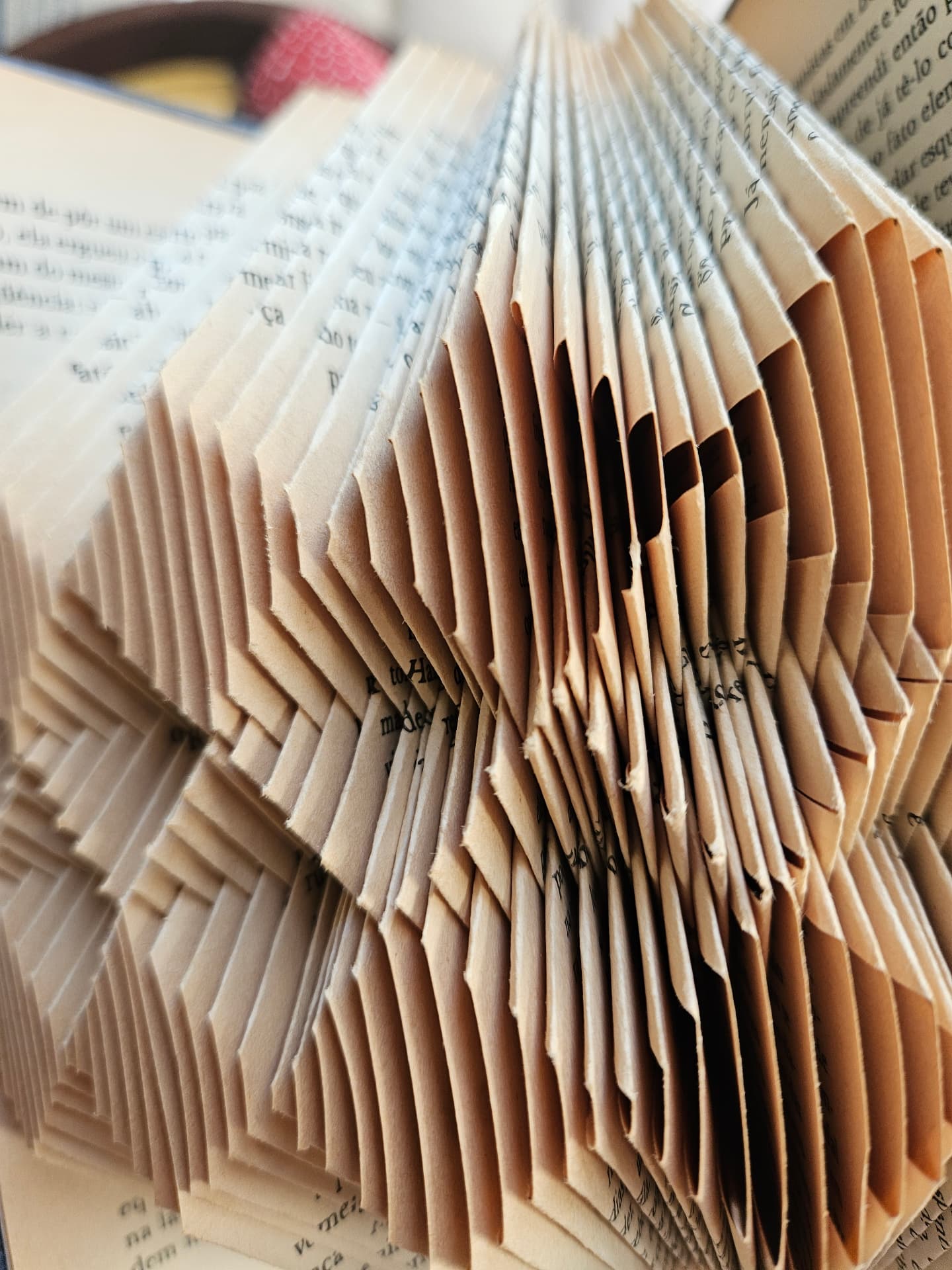
Two people can use the same pattern and end up with very different pieces — the difference is almost always the book. Before folding, check five points.
1. Sheet count
The most important criterion: the more sheets, the more “resolution” the figure has. Count sheets, not pages.
| Sheets | Best for |
|---|---|
| 150–200 | Simple shapes: heart, star, single initial |
| 200–300 | Short names, dates, silhouettes |
| 300–450 | Phrases, images with fine detail |
2. Paper type
Matte offset paper, slightly yellowed, is ideal: it holds the crease and does not reflect light. Avoid coated (glossy) paper, which lets the fold spring back, and very thin bible paper, which wrinkles instead of creasing.
3. Cover and spine
Prefer a hardcover with a sewn spine. Glued (hot-melt) books tend to release sheets as the block gains volume — and bookfolding pushes hard on the spine.
4. Height and proportion
Books between 20 cm and 24 cm tall are the most versatile. Very short books limit the figure's detail; very tall ones make each fold slower and heavier.
5. Condition of the block
Check for loose sheets, damp marks and torn pages. A damaged block will not hold the fold and shows through in the finished piece.
Quick checklist
- Hardcover with a firm spine.
- At least 200 sheets for most projects.
- Matte paper that creases cleanly with a bone folder.
- Height between 20 and 24 cm.
- Intact block, no loose sheets.
With the book chosen, move on to the bookfolding step-by-step guide and generate a pattern already scaled to your copy's sheet count.